


Written by Guest writer, Karoliina Rissanen DVM MRCVS, today we’re sharing with you all about Strangles!
What is Strangles?
Strangles is a highly contagious infection of a horse’s upper respiratory tract caused by a bacteria called Streptococcus equi. The bacteria infect the guttural pouches where it can form pus or an invisible biofilm and be spread via the nasal cavity to other horses or the environment. It is one of the most diagnosed infectious diseases in horses worldwide.
Clinical Signs
Most common clinical signs include fever (rectal temperature above 38.5c), dullness, depression, loss of appetite, difficulty eating/swallowing, lymph node swelling around the jaw, abscesses under the jaw, thick nasal discharge, and cough. The clinical signs appear 3-4 days after the horse has been in contact with strangles bacteria, but it can take up to 21 days for the symptoms to appear! The horse may stay infectious for up to 8 weeks, however if your horse becomes a carrier they can spread the disease for years. Around 1 in 10 horses who recover become carriers and can spread the disease without showing symptoms themselves. These horses can have chondroids, hardened balls of pus, in their guttural pouches where the bacteria stay viable.

Strangles has up to 100% infection rate in naive horses with no immunity. Most horses infected with strangles will make a complete recovery. However, strangles can cause complications in up to 20% of the cases, which can be life threatening. ‘Bastard strangles’ is a condition where abscesses are formed in other parts of the body besides the upper respiratory tract. Purpura hemorrhagica is another severe complication of haemorrhage and oedema due to an improper immune response.

Spread
Strangles spreads by direct contact from horse to horse, even when they touch briefly. It also spreads via indirect contact, where the bacteria are picked up from stables, fields, water or feed buckets, yard equipment, transport, people’s hands, clothes, and boots. The disease is not airborne, but huge quantities of bacteria can be sprayed far into the environment when horses snort or cough. Strangles bacteria can persist in the environment up to 6 weeks in ideal wet conditions.
Testing
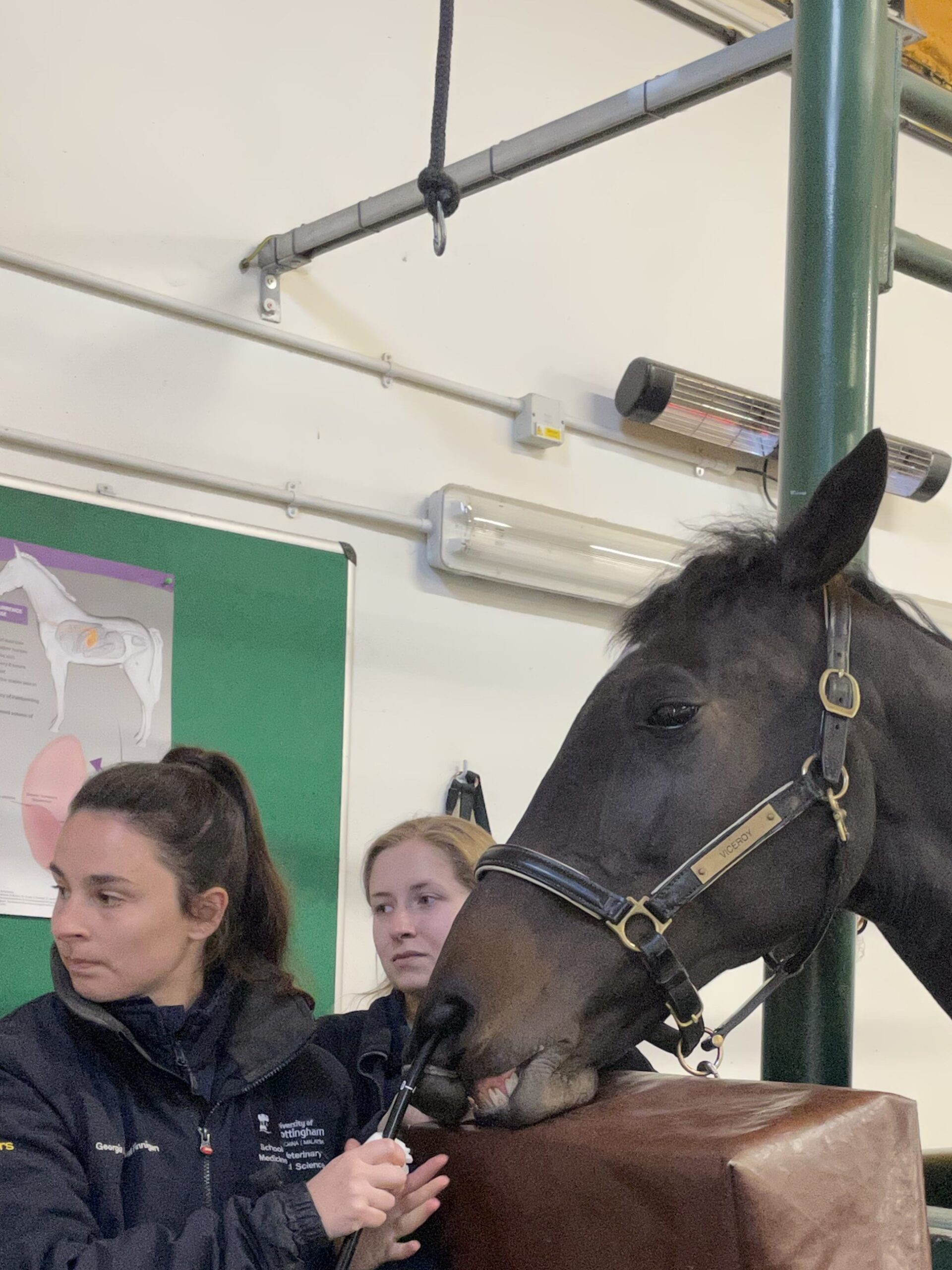
The gold standard of diagnosis is guttural pouch endoscopy. It is >99% accurate and carriers can be identified and treated at the same time. Swabs can be used to test nasal discharge or pus from abscesses in horses with clinical signs. Blood tests for antibodies are a useful tool for screening before bringing a new horse to the yard or investigating an outbreak. Two samples should be taken 2 weeks apart. Blood tests are 93% accurate in testing for an immune response to bacteria.
Stopping the spread and preventing strangles from coming to your yard
All new horses should have had two negative paired blood samples taken before entering the yard. The horse should be isolated for 3 weeks after arriving at the yard.
For horses in increased risk of infection, such as horses travelling to other yards/competition/shows, horses on yards with frequent movement, or in case a known strangles outbreak, temperature should be taken twice a day to identify developing infection and enable precautionary action to prevent spread in the yard. Fever is usually the first sign that appears a few days before the horse starts shedding the bacteria.
In case of an outbreak
All horses should be isolated into their own groups:
Red group – suspected and confirmed clinical cases. Strict isolation. Work with your vet for the best treatment and management practices. Store muck in a safe isolated place as a composting heap, as the heat generated will kill the bacteria, for at least 6 months before disposing as usual.
Amber group – horses been in contact with suspected or confirmed cases within the last 3 weeks. Strict isolation and close monitoring for clinical signs. If any appear to move to Red Group.
Green group – no contact to horses suspected or confirmed to have strangles. Close monitoring for clinical signs. If any appear to move to Red Group. Restrict movement to and from yard
Good hygiene and isolation practices are the best way to protect horses from strangles. Make sure barrier and signs are surrounding the Red Group isolation area. Have disinfection, buckets, bin bags, full length overalls, disposable gloves, caps/hats, and hand sanitiser ready. Have separate water and feed buckets, stable tools, clothes and shoes, handling, and nursing equipment for each group to prevent spreading the disease. Disinfect and dry all equipment, feed and water buckets, transport, and stables after an outbreak. It is good practice to continue cleaning and disinfecting stables, transport, and equipment regularly.

Vaccines
A strangles vaccine is available for prevention of disease and to help with clinical signs during an outbreak. The primary course includes two vaccines 4 weeks apart and a booster every 3-6 months depending on the level of risk. Please call us for more information about vaccinating your horse.
“As well as being a miserable experience for horses that are infected, an outbreak on a livery yard, riding school or other equestrian business can bring activities to a standstill for several weeks and be financially devastating. But it is important to remember that yards who take a proactive, rational approach and communicate openly about the disease, are demonstrating a high level of professional responsibility as well as contributing to faster resolution of an outbreak, reduced impact on horse welfare and lower costs.” – Redwings, Strangles Speak Out!
Strangles: Speak Out 2nd ed. (2018) www.redwings.org.uk/strangles